

Hardware asset management used to be about keeping track of devices. Today, it is about governance. In the 2026 edition of Gartner’s Market Guide for Hardware Asset Management Tools, hardware asset management is described as having risen to a top-level executive priority. As organizations face fragmented visibility, audit pressure, economic constraints, and distributed IT environments, asset control is no longer operational hygiene - it is risk management.
From inventory to lifecycle
For years, many organizations approached hardware asset management as a tracking exercise: devices were recorded, updated, and reconciled periodically.
But fragmented visibility remains one of the most persistent challenges in modern IT environments. Asset data is often scattered across spreadsheets, legacy tools, procurement systems, endpoint platforms, and HR systems. Without consolidation, there is no reliable single source of truth.
So when leadership asks:
- Are we audit-ready?
- Which assets are approaching end of life?
- Where is each device currently assigned?
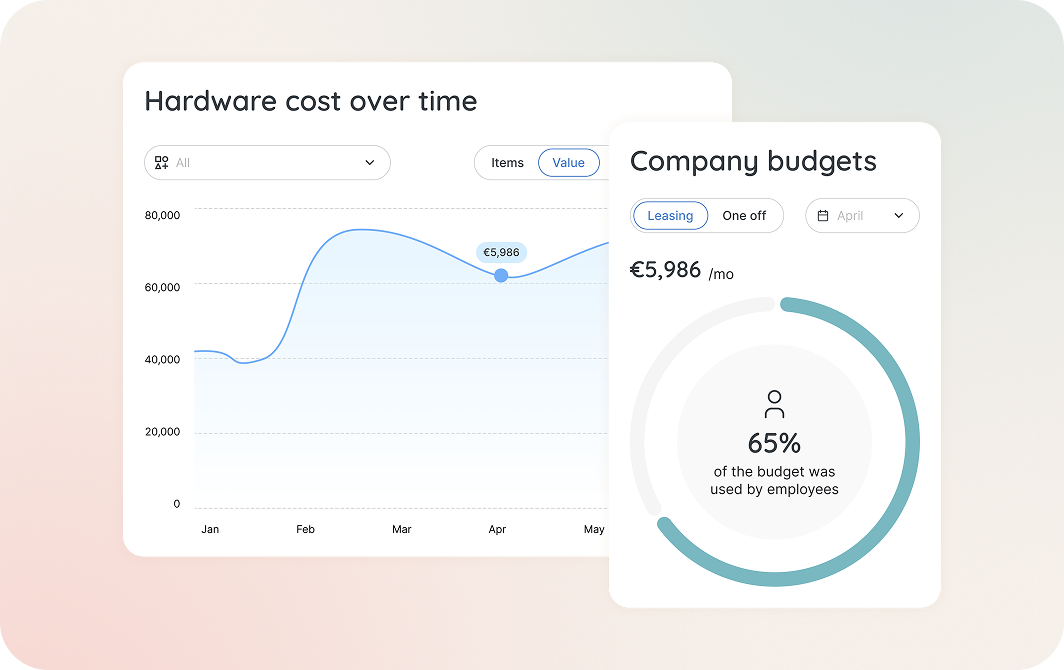
- What is the true cost of our hardware estate?
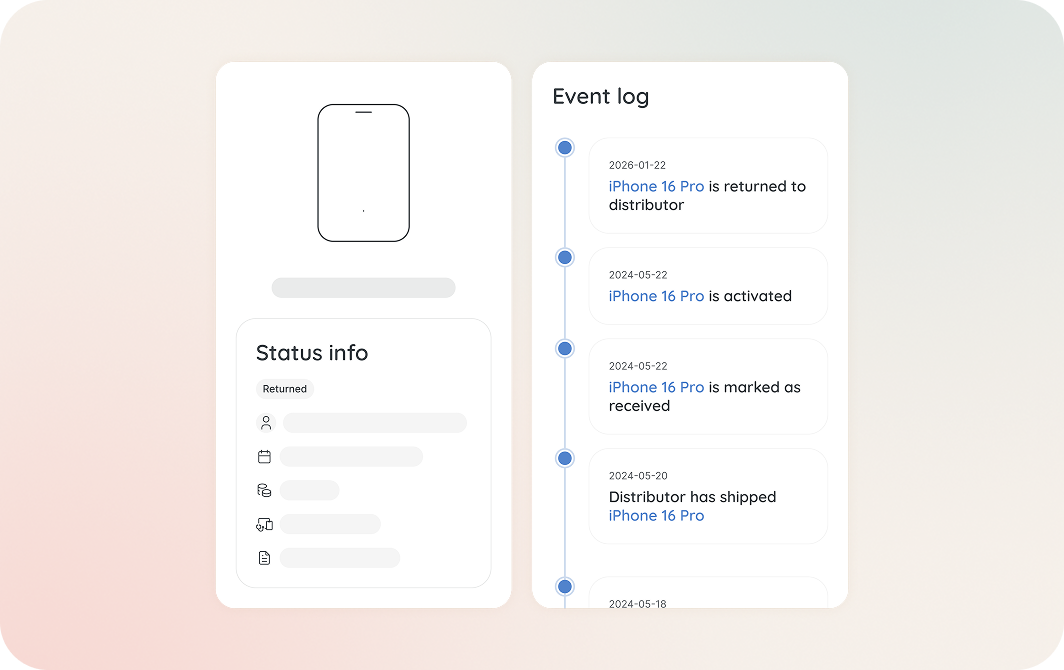
The answers must be immediate and defensible, and that requires more than inventory. It requires lifecycle management - from planning and procurement to assignment, monitoring, reuse, and retirement - structured as one connected process.
Structural pressure is accelerating the shift
Three forces are reshaping hardware asset management:
- Economic pressure is forcing organizations to extract more value from existing hardware. Lifecycle transparency enables better forecasting, reduces cost leakage, and avoids sudden refresh waves.
- Compliance and audit requirements are increasing. Incomplete inventories, missing documentation, and inconsistent disposal processes introduce measurable risk.
- Operational strain is reaching a breaking point. Manual tagging, reconciliation, and spreadsheet management consume valuable IT time and introduce avoidable errors.
These are not temporary challenges, but rather reflecting a maturing discipline. Hardware asset management is becoming lifecycle governance.
Integration is no longer optional
One thing is clear: lifecycle governance cannot function in isolation.
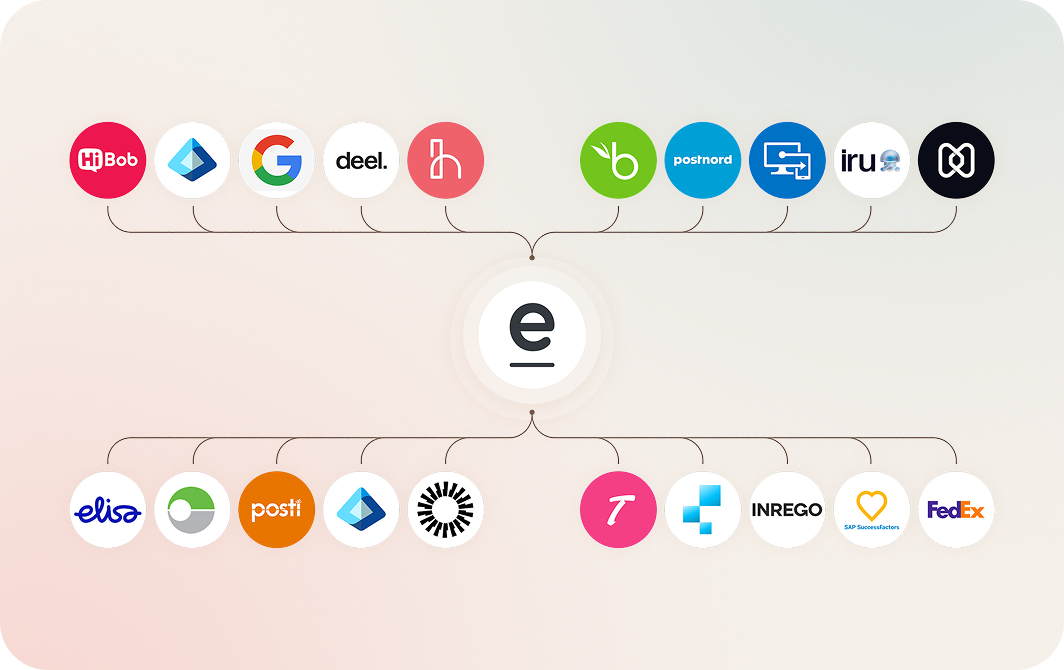
Asset data must move seamlessly between endpoint management systems, HR platforms, procurement workflows, IT service management tools, identity providers, and financial systems.
Published APIs and integration capabilities are no longer “nice to have”, they are foundational.
Modern lifecycle platforms increasingly serve as a structured repository for aggregated asset data, consolidating information from multiple systems into one operational layer of control. Without integration, lifecycle governance breaks down.
Extending lifecycle value across all IT assets
Lifecycle transparency is not limited to hardware, even though most IT management conversations start with that. To truly manage cost and governance, organizations must track and govern the full IT asset lifecycle, including:
- Hardware devices
- Software licenses and SaaS subscriptions
- Mobile subscriptions and telecom services
When these elements are managed separately, visibility gaps and cost leakage multiply. But when managed as one lifecycle system, organizations gain predictability, accountability, and financial clarity.

Supporting this transition
The challenges described above - fragmented data, audit pressure, manual inefficiencies, and cross-system complexity - are exactly the problems Velory was built to solve.
Velory has been recognized as a Representative Vendor in the 2026 Gartner® Market Guide for Hardware Asset Management Tools. Our approach reflects the lifecycle direction increasingly visible across the hardware asset management market.
Velory is a vendor-agnostic, cloud-native platform for IT asset lifecycle management. Compared to other ITAM platforms in the market, we connect your existing ecosystem instead of forcing you to replace it.
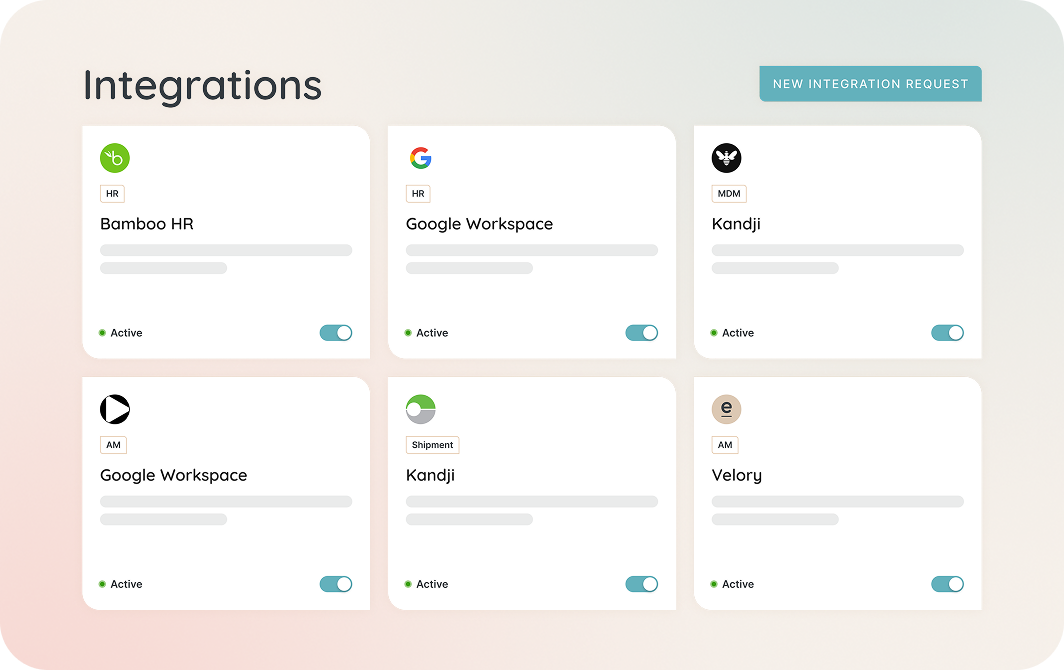
Through our Universal API, Velory integrates with leading endpoint management tools, HR systems, identity providers, procurement platforms, and financial systems. Asset data flows into a unified lifecycle structure, creating a single operational layer without forcing system replacement.
This enables organizations to:
- Establish a reliable single source of truth
- Automate onboarding and offboarding workflows
- Maintain unified visibility across hardware, software, and mobile subscriptions
- Embed reuse and end-of-life documentation directly into operations
- Align IT, Finance, HR and Procurement through structured governance
The shift from tracking to lifecycle governance has gone from theoretical to operational and Velory supports that transition by connecting ownership, workflows, integrations, and policy-driven control into one lifecycle framework.
The question for IT leaders
If asset visibility still depends on manual reconciliation or reactive reporting, the issue is not simply tooling, it’s lifecycle design.
The organizations that move first will gain clearer accountability, stronger audit readiness, and greater financial control. The shift from tracking to lifecycle governance is already underway and the question is whether your operating model reflects it.
If you would like to explore how lifecycle-driven IT governance can be operationalized in your organization, schedule a walkthrough with our team.
Gartner, Market Guide for Hardware Asset Management Tools, Tim Zimmerman, Jen Lichucki, Ankita Hundal, Todd Larivee, 16 February 2026.
Gartner does not endorse any company, vendor, product or service depicted in its publications, and does not advise technology users to select only those vendors with the highest ratings or other designation. Gartner publications consist of the opinions of Gartner’s business and technology insights organization and should not be construed as statements of fact. Gartner disclaims all warranties, expressed or implied, with respect to this publication, including any warranties of merchantability or fitness for a particular purpose.
.jpg)