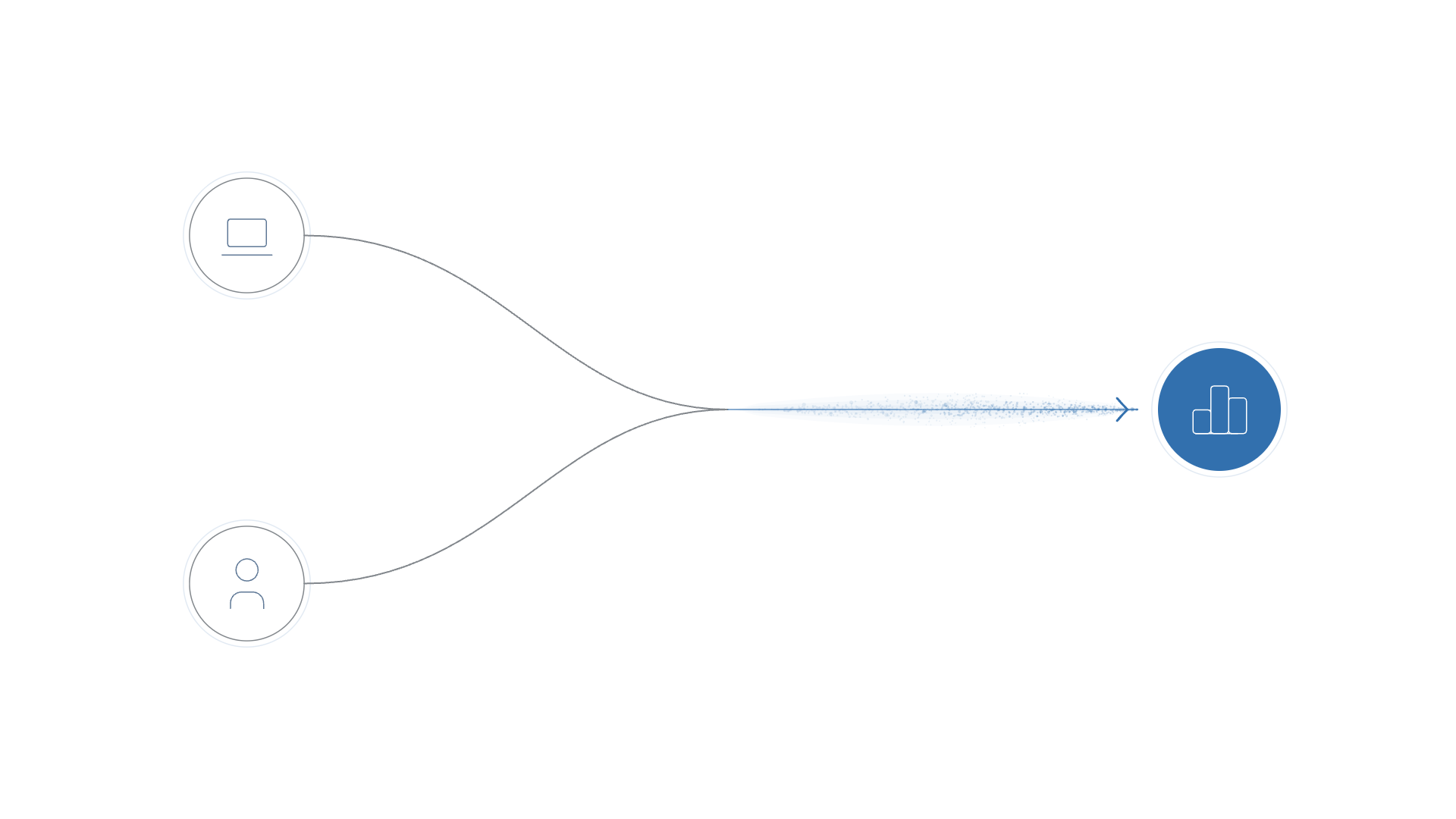
Every employee request becomes a ticket on your desk
Every request turns into a back-and-forth about what's approved and what's in budget, so IT becomes the bottleneck. And because everyone gets the same standard kit, the people who need something different just make do.
A self-service store
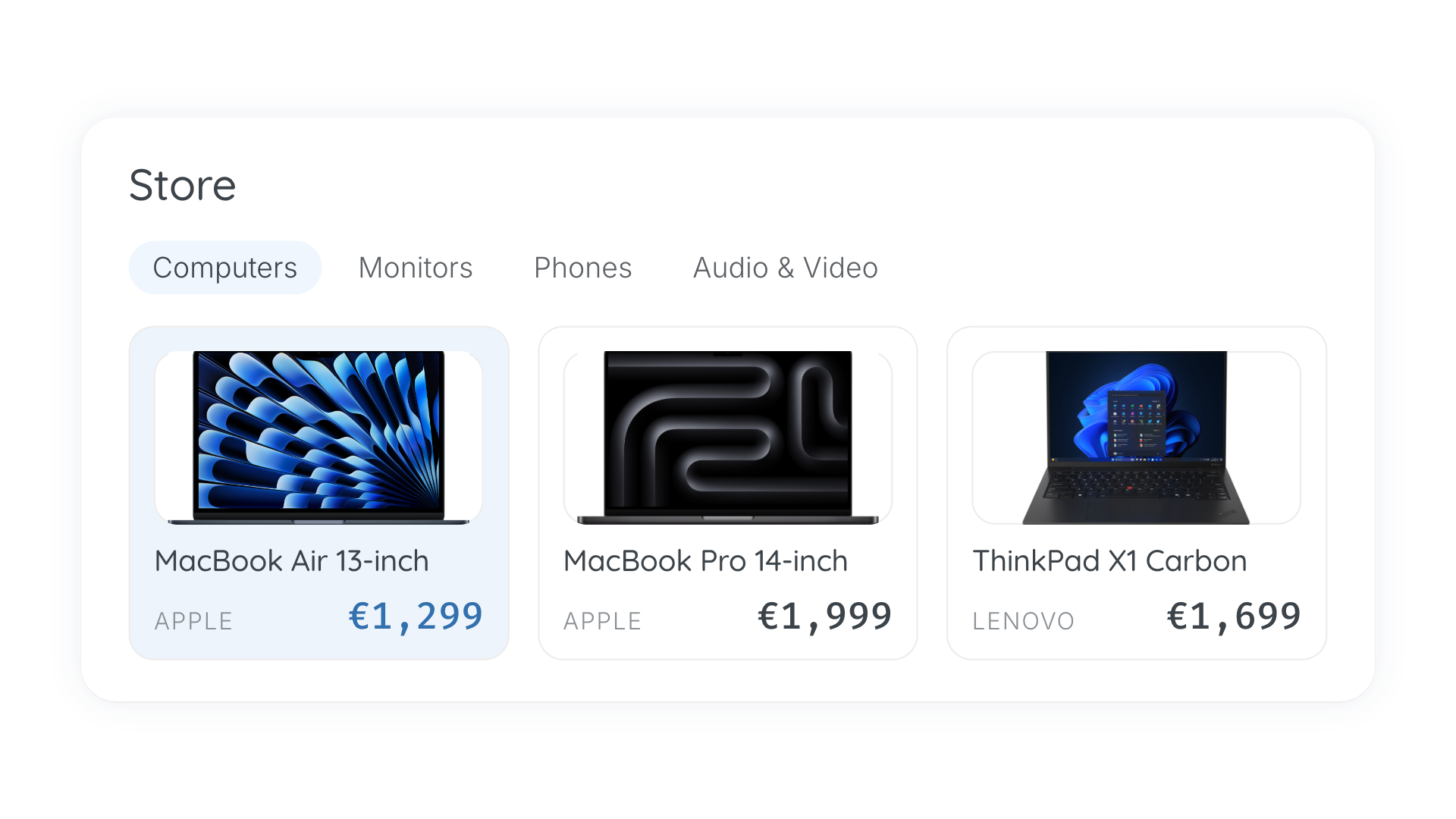
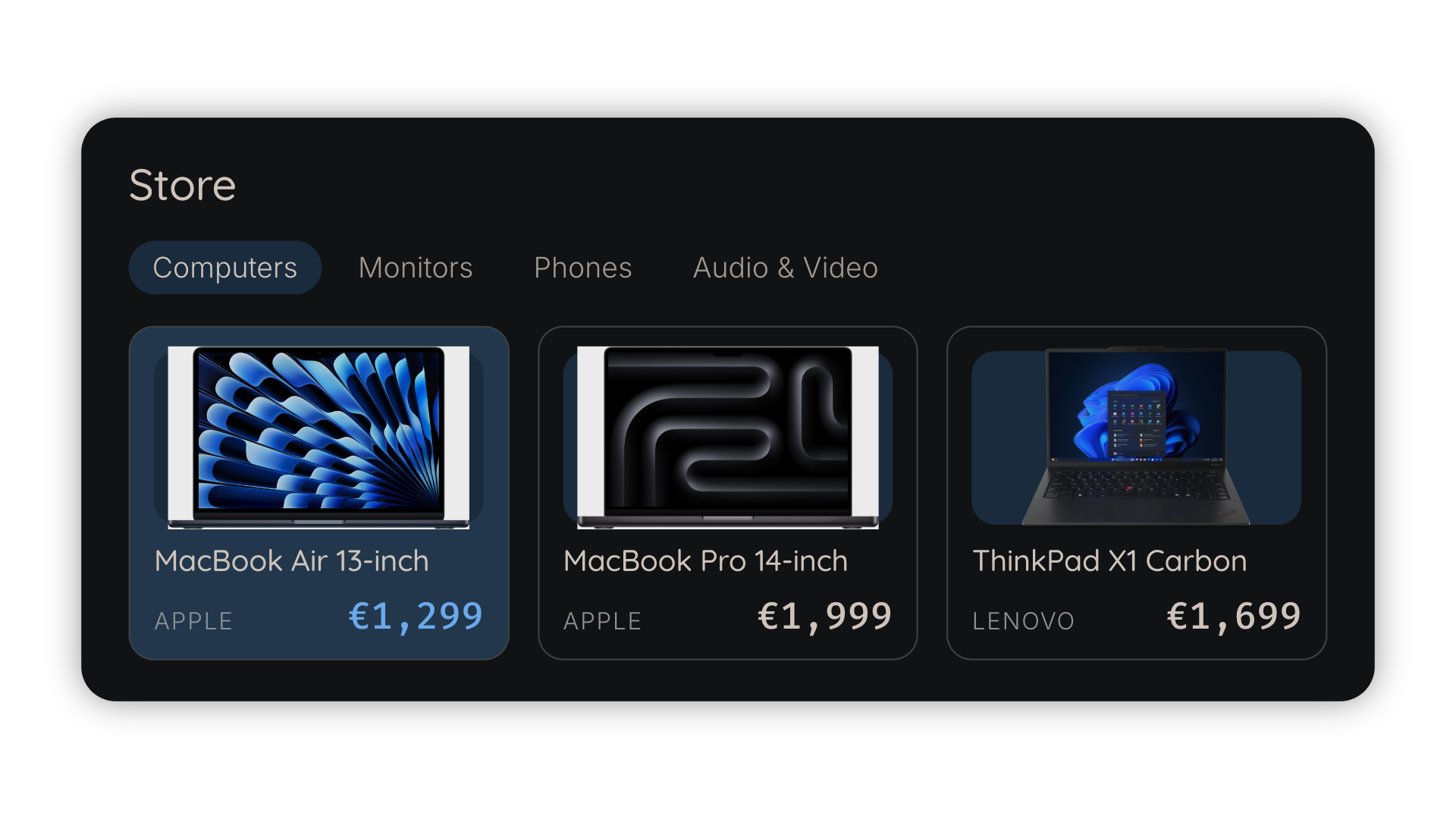
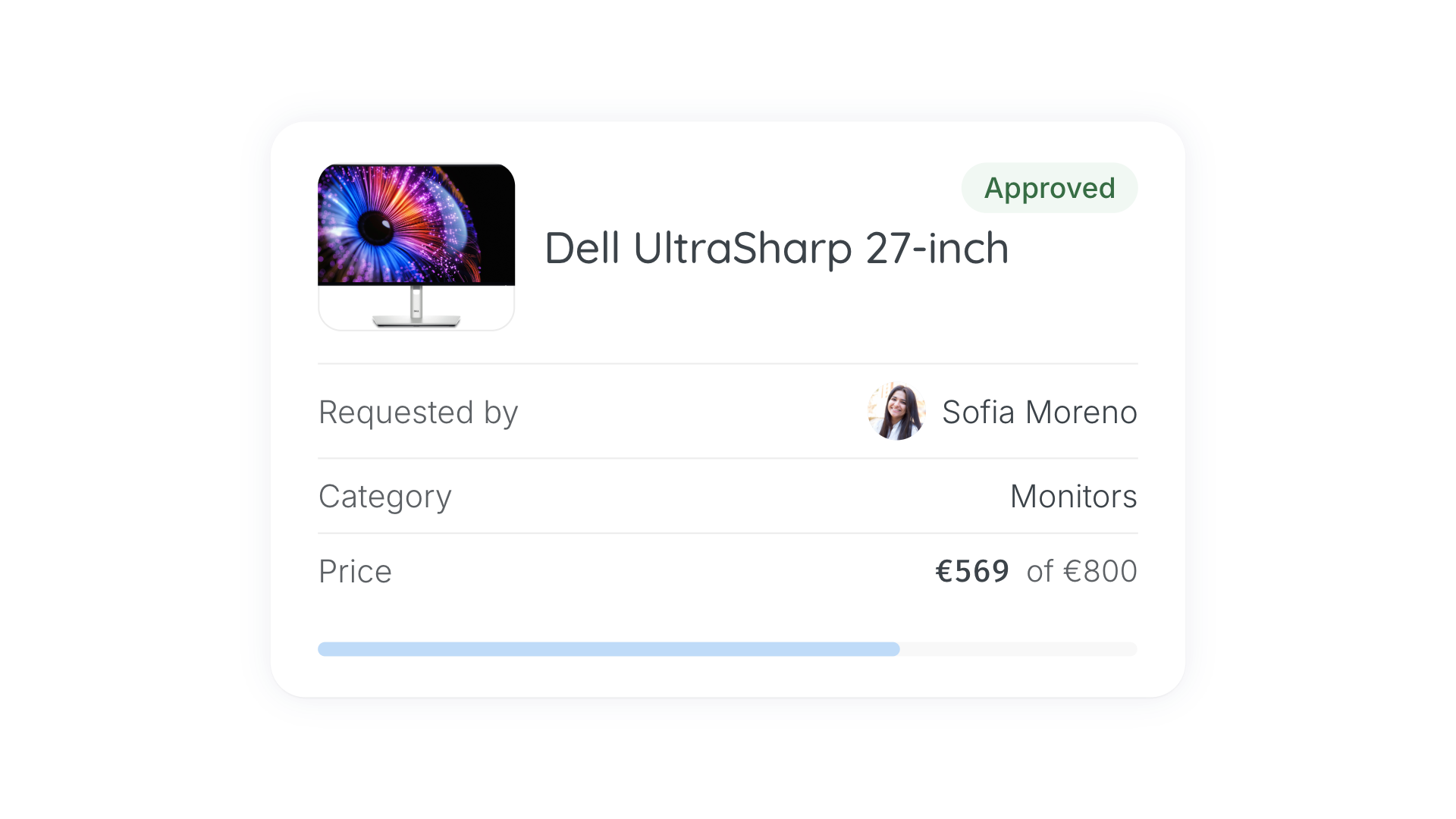
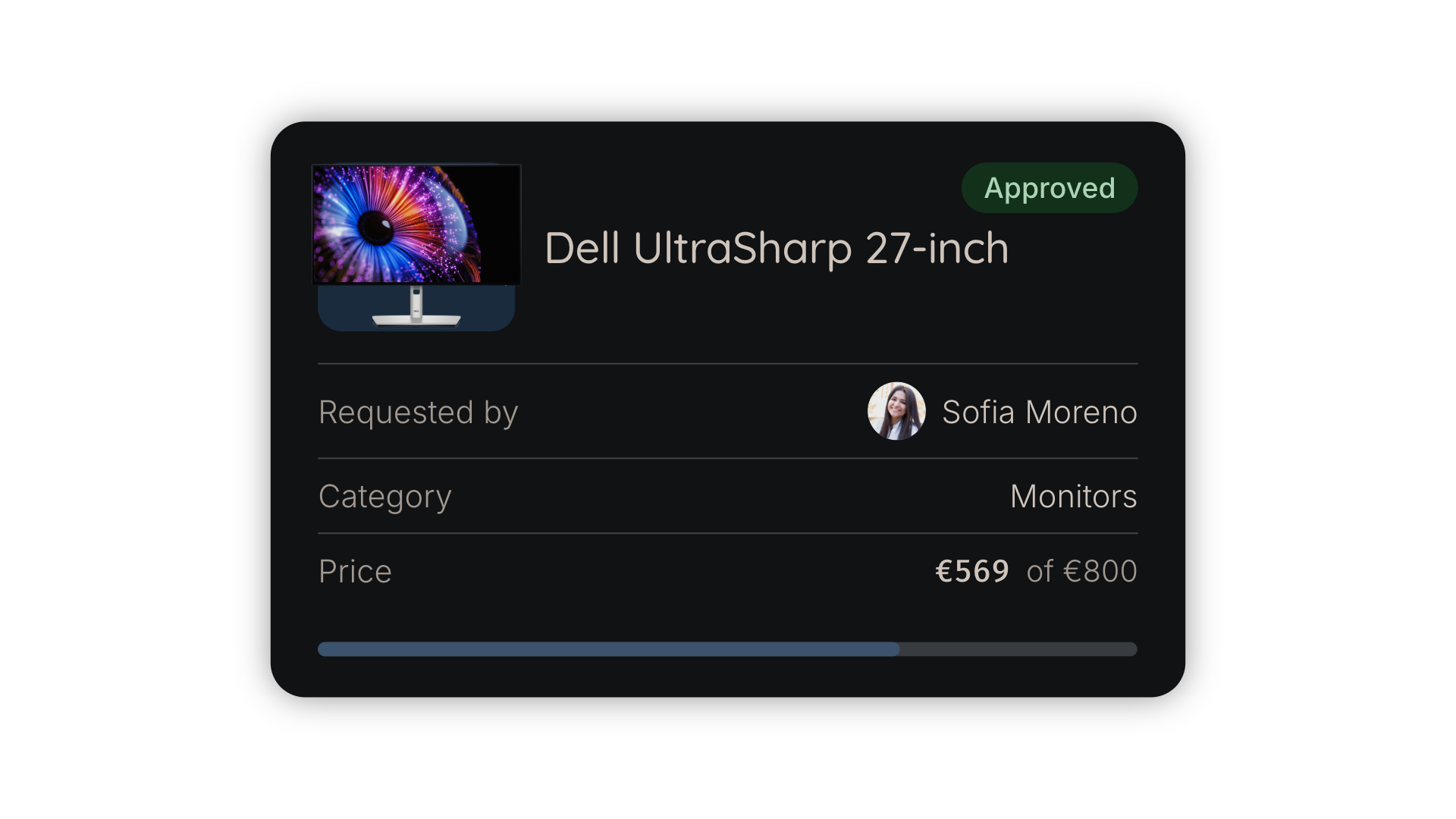
People browse a self-service store and pick an approved device within their budget, so they get a say and IT keeps the guardrails.
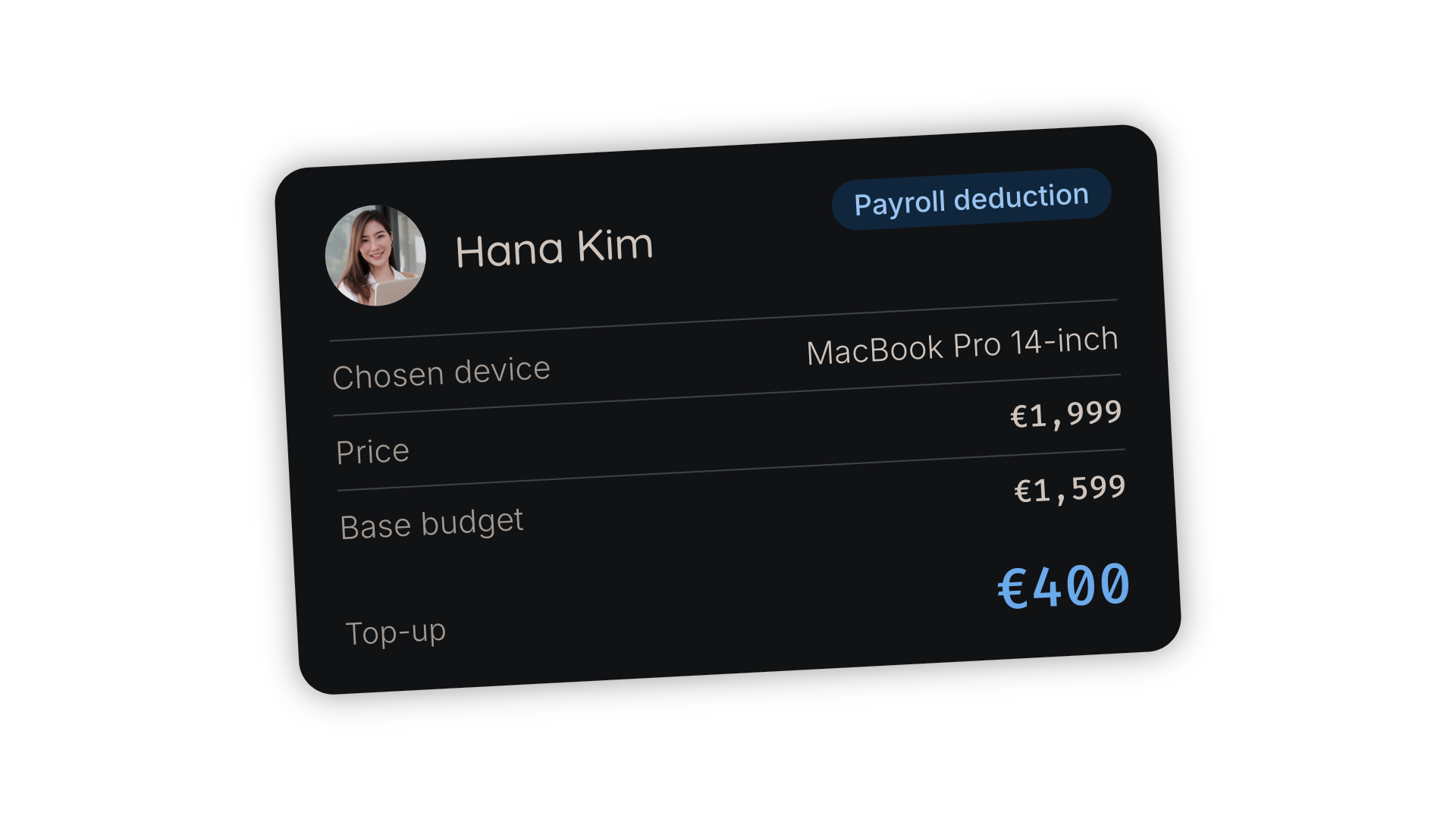
Top up through payroll
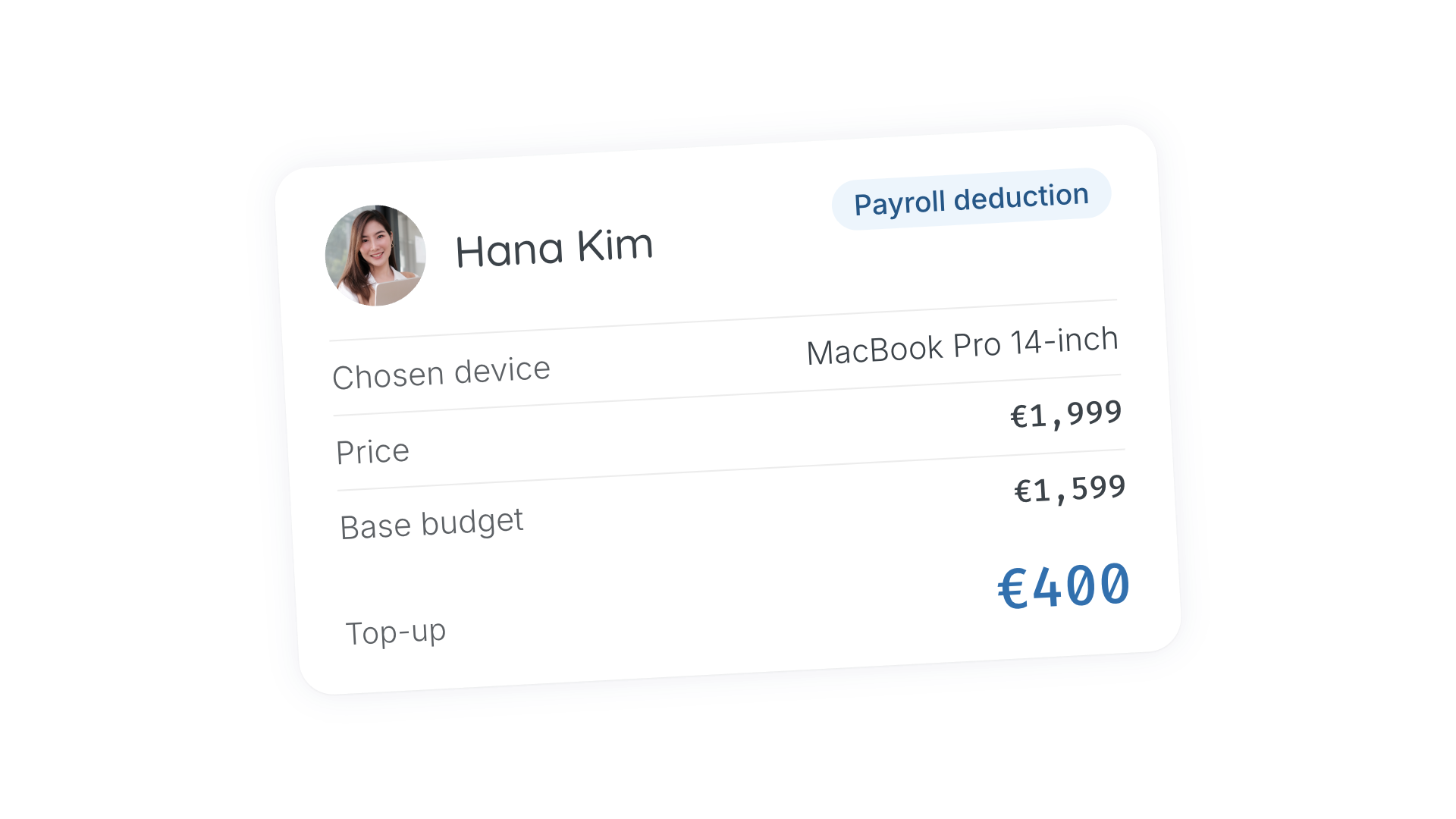
Want a higher spec than the standard allocation? Cover the difference through payroll deduction, with IT and Finance still holding the base budget.
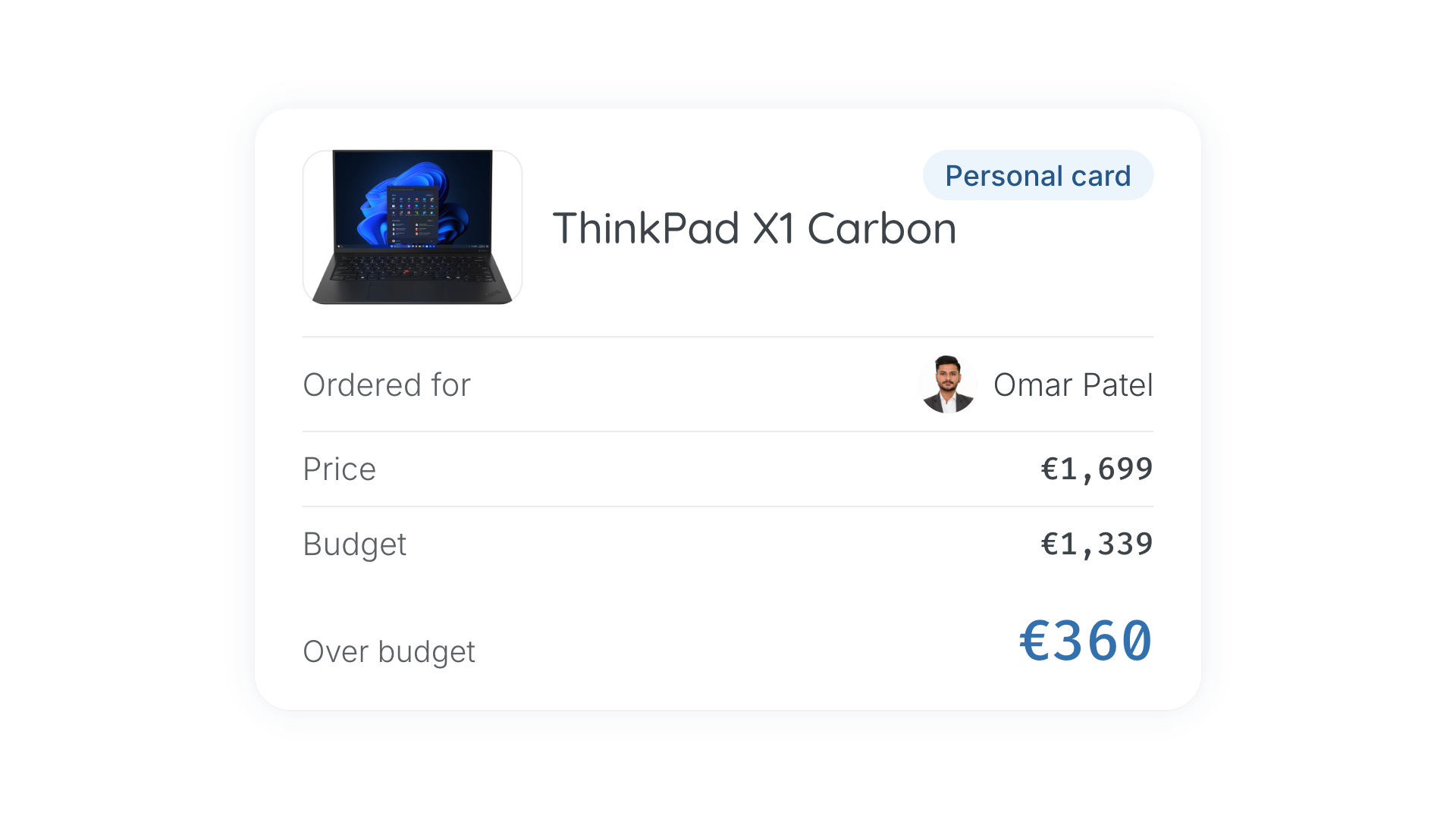
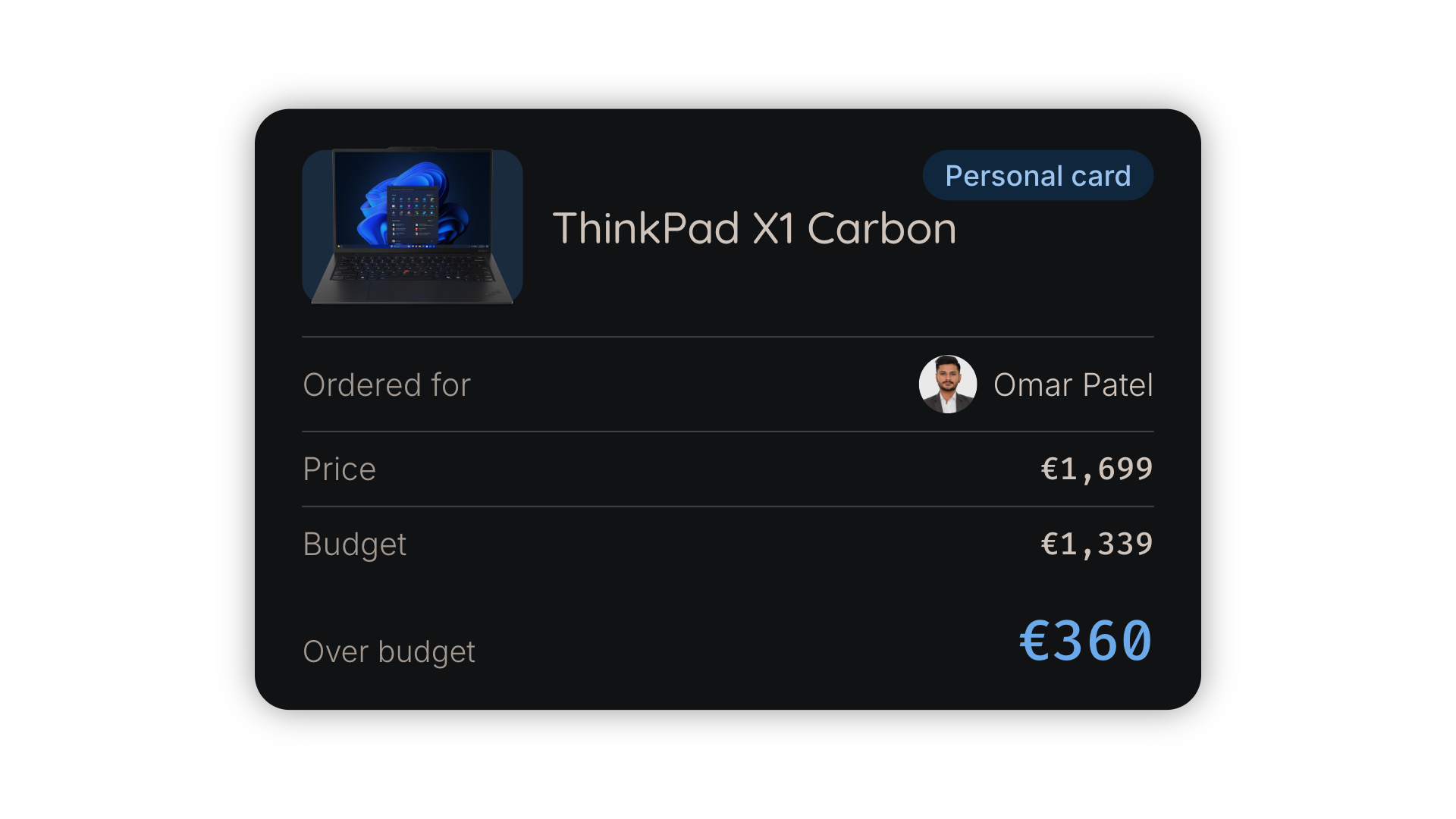
Overages, handled your way
Allow over-budget orders through salary deduction or a personal card, or keep them off the platform entirely. Your policy and local tax rules decide.
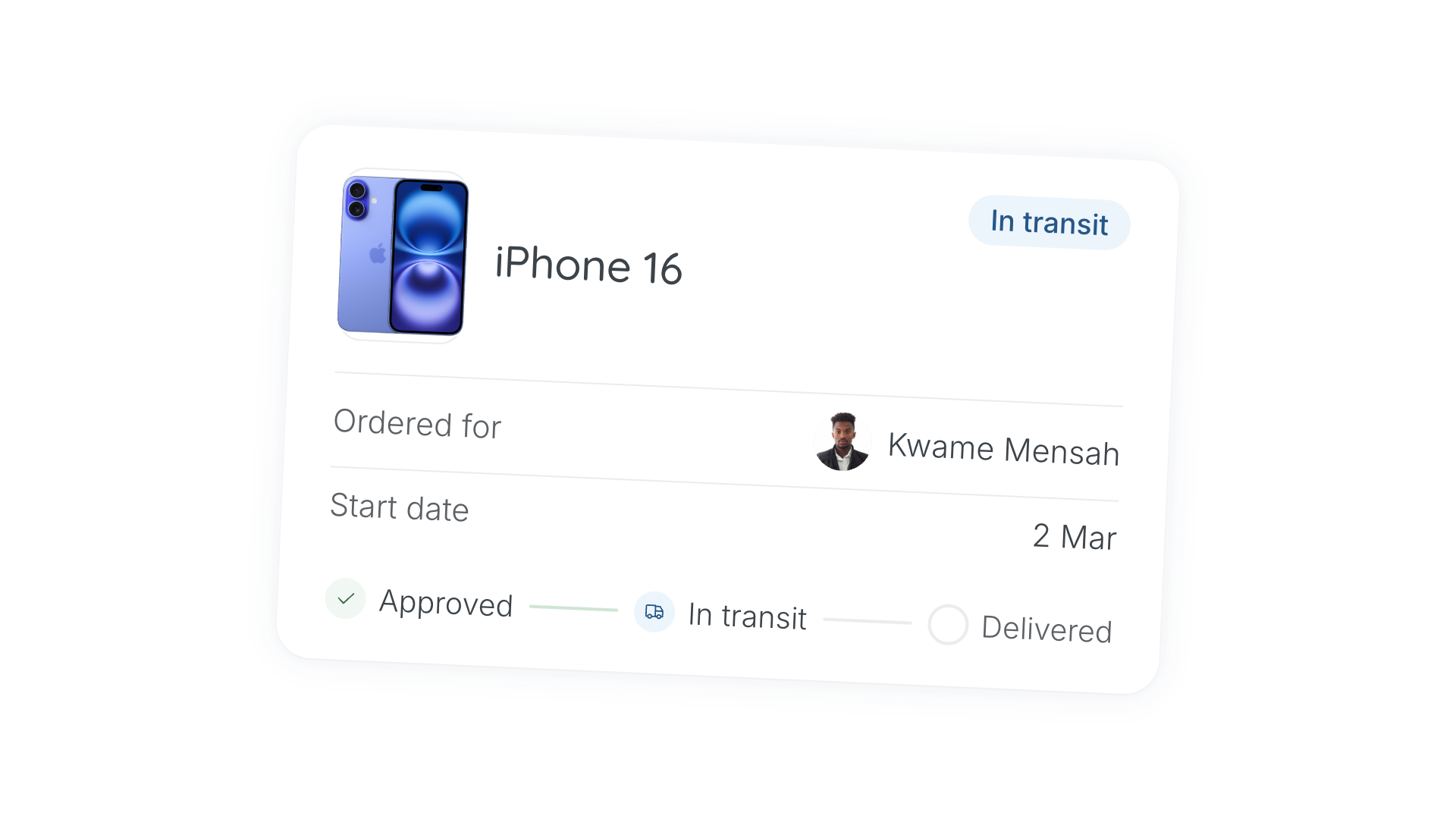
Provisioned like any order
A chosen device runs the same approval and provisioning flow as anything else, so it is ready before their first day at work without a side process.
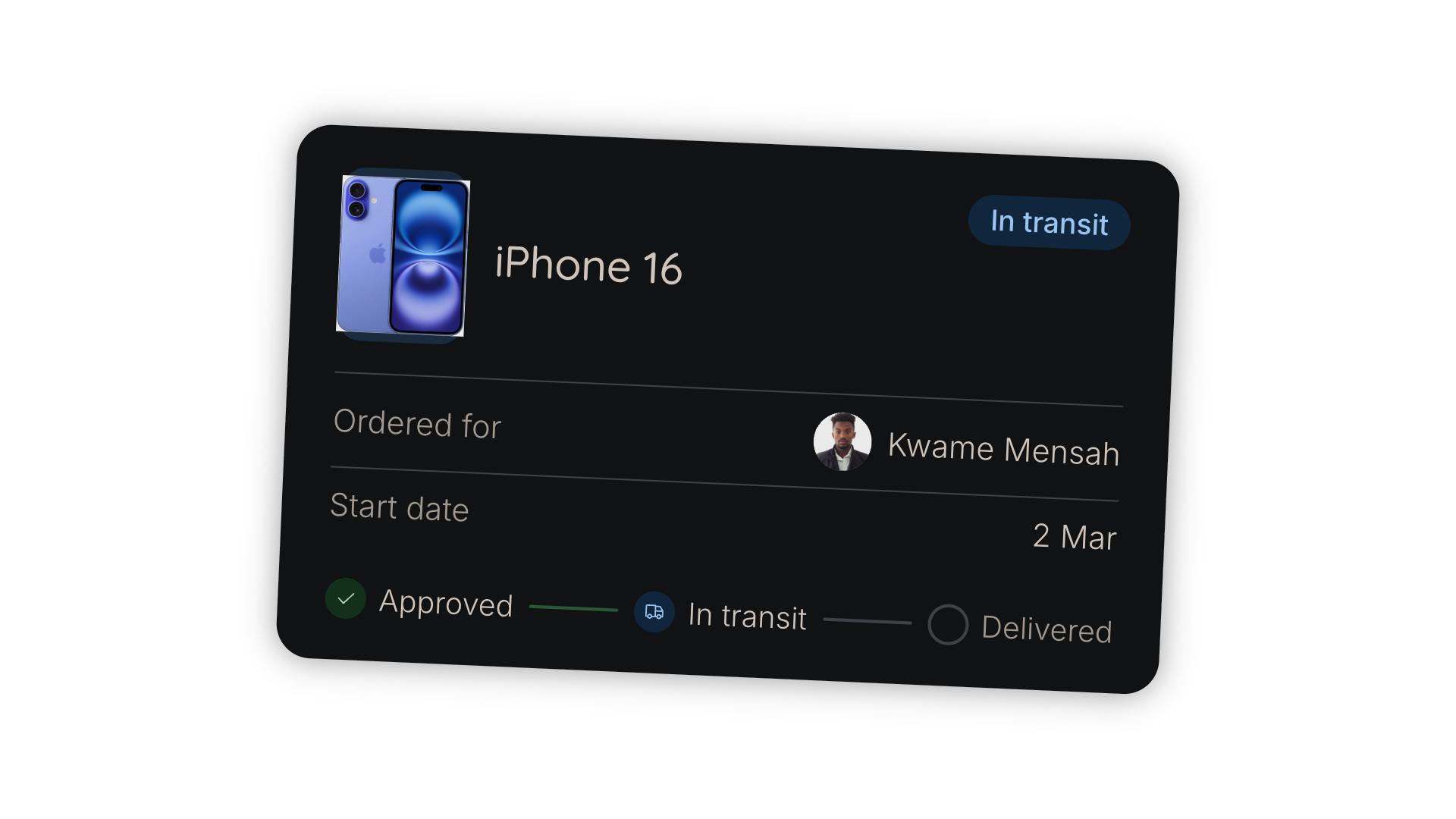
Choice without losing control
IT keeps budgets, categories and approvals, and people choose freely inside them.
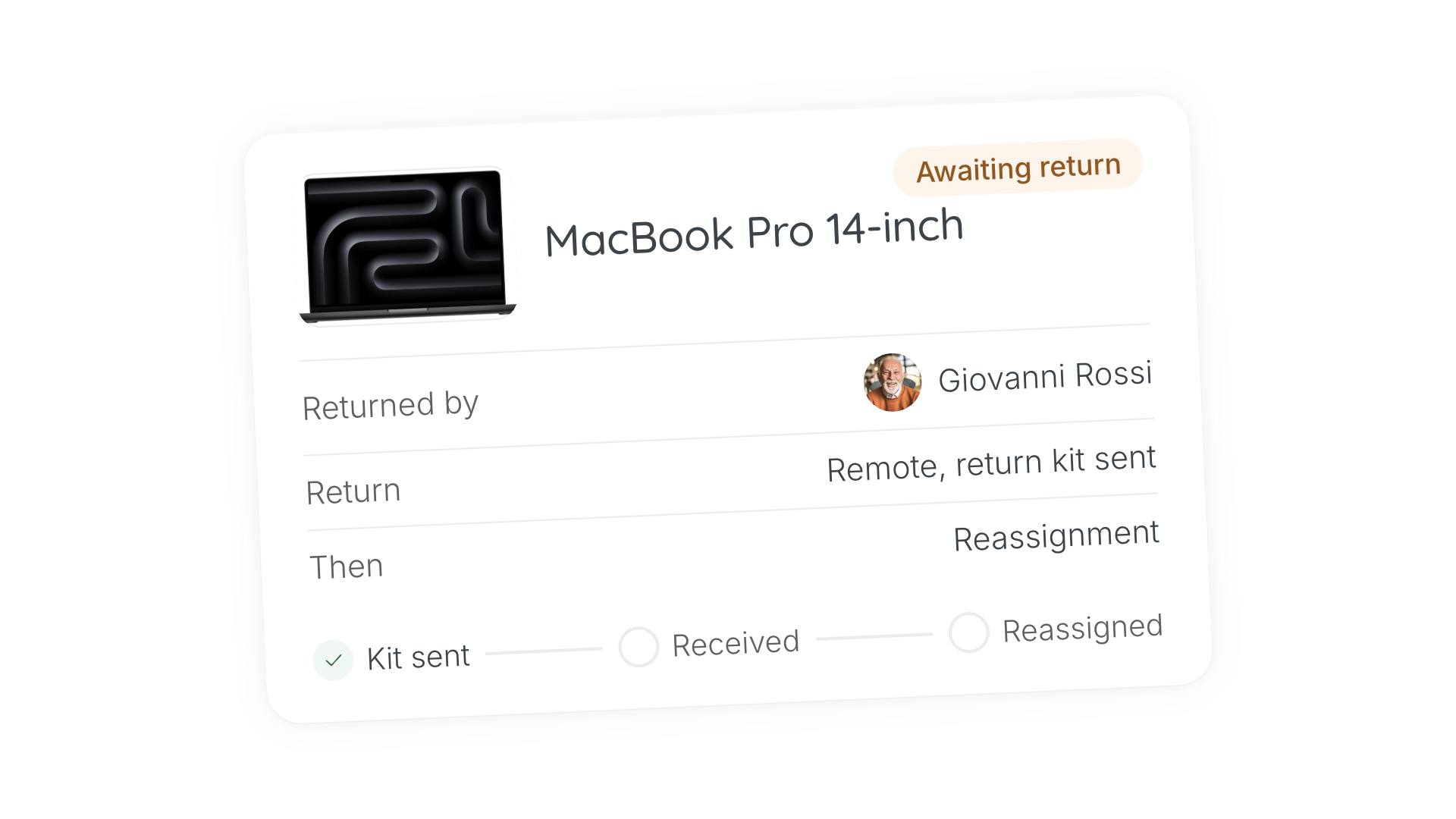
Returns handled at offboarding
When someone leaves, they get a return option and instructions, in-office or remote, and the device flows on to reassignment, storage, or recycling.
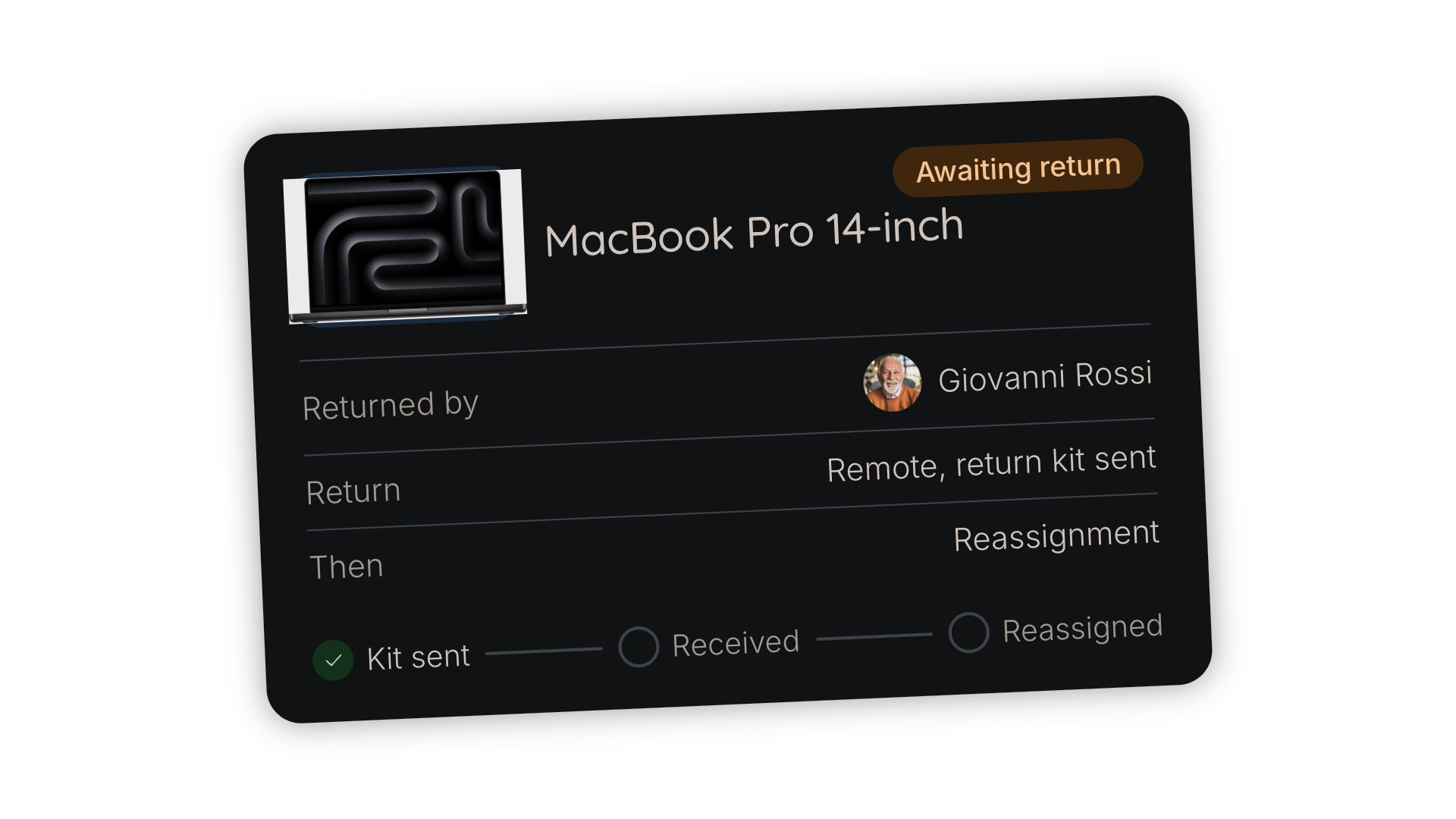
From your policy to their pick, in four steps

































What employee choice connects to
The lifecycle runs across every asset type and the systems around it. Here is what sits alongside it.
FAQ
Set budgets, categories and approval rules per team or role, and people only see what fits. If someone wants more than their budget covers, you decide how that works: salary deduction, a personal card, or not at all.
CYOD is a model where employees select approved devices within company policy and budget, so they get flexibility and IT keeps governance.
People get a device that suits how they work, and onboarding gets smoother because nobody waits for IT to decide. IT keeps the budget and the policy.
Yes. If someone wants a higher-spec device than their standard allocation, they can cover the difference through monthly payroll deduction. IT and Finance keep the base budget, and the employee gets the gear they actually want.
Velory automates the return. When offboarding starts, the employee sees a return option on their device page and gets emailed instructions, for in-office or remote returns. IT tracks every return, and once the device is back, Velory takes the next step, whether that is reassignment, storage, refurbishment, or recycling, based on your lifecycle rules.