

Sustainability is no longer just an ESG headline - it’s a business necessity. For CIOs, CFOs, and HR leaders, IT is a large contributor to both hidden costs and carbon emissions. The majority of an IT device’s footprint happens before it ever reaches an employee’s desk. That’s why extending the lifecycle of hardware through reuse, refurbishment, and trade-in is quickly becoming one of the most effective levers for companies looking to cut Scope 3 emissions and optimize spend.
Why reuse matters for business leaders
For most companies, IT hardware is refreshed every 2–4 years. That means thousands - sometimes tens of thousands - of devices are retired while still fully functional. The business impact of choosing reuse over replacement falls into four key areas:
- Financial efficiency: Extending device life or choosing refurbished reduces capital spend and optimizes leasing budgets.
- Sustainability & compliance: Circular flows directly reduce Scope 3 emissions, a growing reporting requirement for ESG audits.
- Employee experience: Giving employees device choice, including refurbished, creates flexibility without breaking policy or budget.
- Risk reduction: Trade-in and certified refurb channels ensure secure, documented handling of devices, avoiding compliance gaps.
How Circular IT fits into the lifecycle
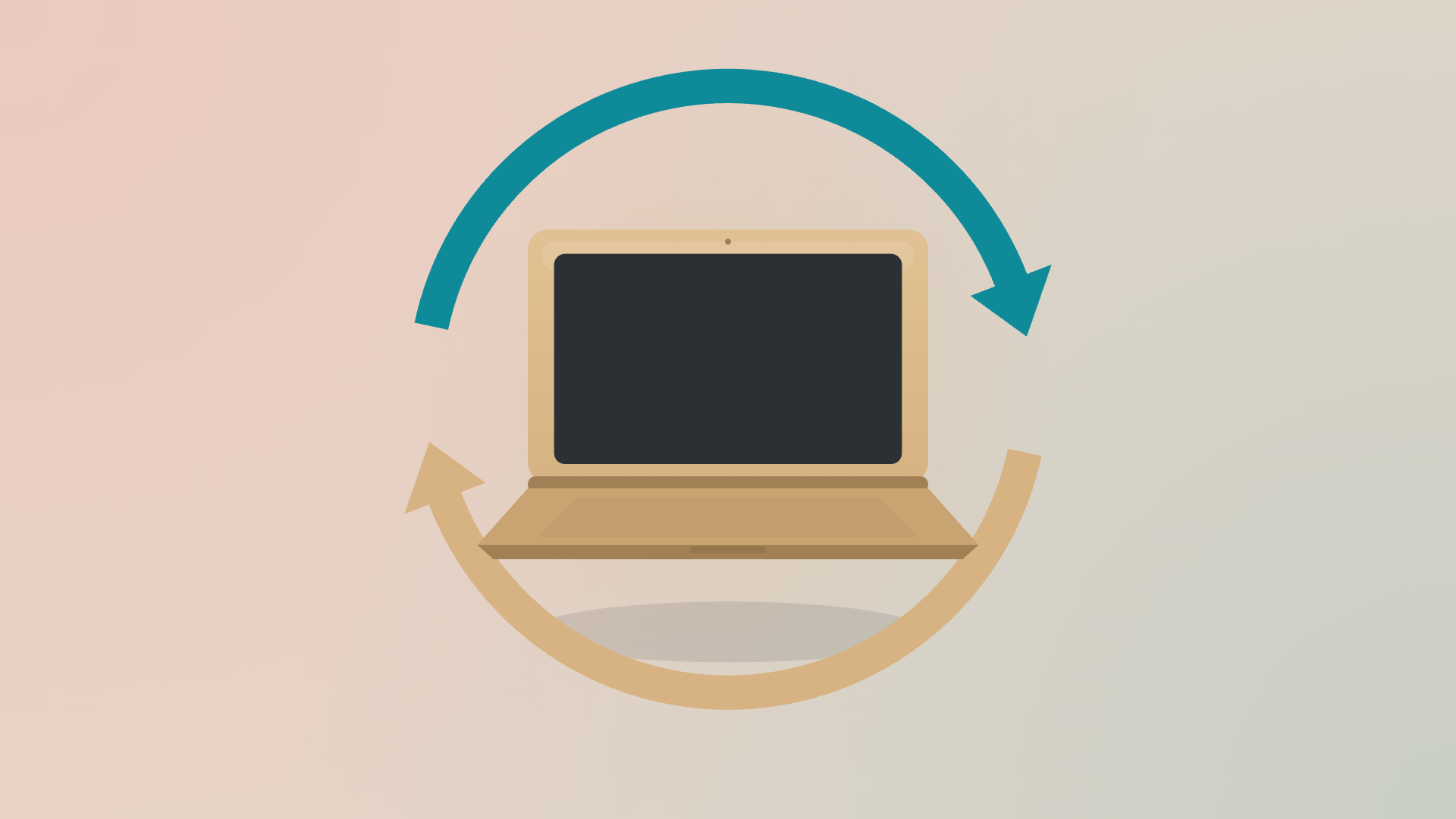
Circularity doesn’t replace the IT lifecycle - it strengthens it. Instead of a linear path (procure → use → dispose), circular IT extends the value of every device by embedding reuse, refurbishment, and recovery directly into day-to-day IT operations.
With the right lifecycle foundation in place, companies can:
Reuse & reassign devices
When employees join, move roles, or leave, working laptops, phones, and tablets don’t have to sit idle. Devices can be reassigned to new employees, maximizing utilization and reducing unnecessary purchases, without compromising control or security.
Offer refurbished by default
When new hardware is needed, refurbished devices can be offered alongside new ones in the company catalog. Certified refurbished equipment delivers the same performance at significantly lower cost and environmental impact, while still meeting company policies and employee expectations.
👉 Read about our Inrego integration for adding refurbished devices to your procurement strategy
Trade-in and recover value
Devices that truly reach end-of-life shouldn’t disappear into drawers or uncertain disposal flows. Through structured trade-in and take-back processes, hardware can be collected, securely handled, reused where possible, or responsibly recycled, while recovering residual value.
👉 Discover our ITAD integrations for trade-in
Track and report impact automatically
Every reassignment, refurbished purchase, and trade-in becomes part of the lifecycle data. This means finance teams get clearer cost insights, IT gets better planning data, and sustainability teams gain measurable progress on Scope 3 emissions, without manual reporting.
With this approach, circular IT becomes a built-in capability of lifecycle management, not a side initiative or one-off sustainability project.
Looking ahead
Circular IT works best when it’s embedded into the systems IT already uses, not managed in parallel spreadsheets or external processes.
Velory supports this by connecting reuse, refurbished purchasing, and trade-in directly to the IT lifecycle. Devices can be reassigned, refurbished options offered in the company store, and end-of-life hardware recovered through integrated ITAD partners, all while keeping data, governance, and reporting in one place.
For leaders responsible for cost control, compliance, and employee experience, circular IT is no longer just about sustainability. It’s about running IT smarter, longer, and with fewer blind spots.